


Commercial Landscaping That Feels Good to Use

The approach to a workplace, retail unit, development or hospitality venue sets the tone before anyone steps inside. Thoughtful commercial landscaping does more than make a site look cared for. It creates a clearer arrival, offers somewhere to pause, and makes the everyday experience of staff, visitors and customers feel more considered.
For businesses across Suffolk and Cambridgeshire, the best outdoor spaces are not built around a short-lived visual statement. They are planned around use, maintenance, safety and atmosphere. A well-designed frontage can make a professional first impression; a sheltered seating area can give staff a proper place to take a break; and planting can soften hard building lines without becoming another demanding task on the facilities list.
What Commercial Landscaping Should Achieve
Commercial grounds have to work harder than private gardens. They may need to guide footfall, improve accessibility, create privacy around outdoor seating, frame signage, or make a compact courtyard feel less enclosed. Often, they must do several of these things at once.
The strongest schemes begin with a practical question: how do people use this area now, and how should they feel when they use it? A medical practice may need an entrance that feels calm and easy to navigate. An office may benefit from a quiet breakout space away from screens and desks. A restaurant terrace needs atmosphere, durable surfaces and clear routes for both guests and staff.
That purpose should shape every decision, from the width of a path to the choice of paving and the height of a planted border. Decoration comes after the layout is working properly, not before.
First impressions begin at the boundary
The boundary of a site is often overlooked, even though it is where confidence is formed. Tired fencing, patchy grass, poorly placed bins or an awkward route from the car park can make an otherwise well-run business feel neglected.
Fencing, gates, screening and evergreen planting can define a site without making it feel closed off. Natural materials and balanced planting help soften the transition from pavement or parking area to building entrance. Where security is a concern, the design needs to provide a clear boundary while retaining good visibility and safe access.
A clean, legible entrance is particularly valuable where visitors may already feel uncertain, such as clinics, professional offices, schools and managed residential developments. The aim is not to overcomplicate the approach. It is to make arrival feel straightforward and welcoming.
Designing Commercial Landscaping Around Real Use
A successful scheme respects the realities of the site. Soil conditions, drainage, sun and shade, wind exposure, service access, existing levels and local planning considerations all affect what can be built and what will continue to perform well over time.
This is why a consultation-led process matters. Before choosing plants or finishes, it helps to understand who will maintain the space, when it is busiest, where water gathers after rain and whether deliveries or maintenance vehicles need access. These details are not glamorous, but they protect the investment and prevent expensive changes later.
For example, a lawn may look appealing beside an entrance, but it may struggle where people naturally cut across it each day. In that setting, a widened path, gravel margin or robust planted area may be the better long-term choice. Similarly, pale paving can brighten a shaded courtyard, yet it may not suit a busy café terrace where spills and foot traffic are constant.
Surfaces that are safe, durable and considered
Paving, decking and paths give commercial spaces their structure. They need to feel appropriate to the building, cope with regular use and remain safe in wet British weather. Slip resistance, drainage, edge detailing and changes in level should all be considered early in the design.
There is no single best material. Natural stone can bring a grounded, high-quality feel to a client-facing courtyard, while porcelain may suit a contemporary terrace that needs a crisp, consistent finish. Timber decking can create warmth in a sheltered setting, but it needs careful specification and ongoing care. Composite decking may reduce maintenance, although it has a different appearance and can become warm in direct sun.
The right choice depends on the setting, the expected wear and the feeling the business wants to create. A good landscape build balances these practical demands with visual calm, rather than forcing a fashionable material into the wrong location.
Planting with a purpose
Planting is often what turns a hard, functional site into somewhere people genuinely enjoy spending time. It can add seasonal interest, absorb some noise, soften boundaries and provide a visual break from buildings, vehicles and screens.
For commercial settings, planting should be resilient and proportionate. Dense, high-maintenance borders may not be the right answer if there is limited time for regular upkeep. A more enduring palette might combine evergreen structure with perennials, ornamental grasses and carefully selected shrubs that offer movement, colour and texture across the year.
Native and pollinator-friendly planting can be a positive addition where it suits the brief, but it should not be treated as a token gesture. It needs the right conditions, enough space and a realistic maintenance plan. A smaller area planted well will often have more impact than a large bed that quickly becomes untidy.
Outdoor Spaces That Support Wellbeing
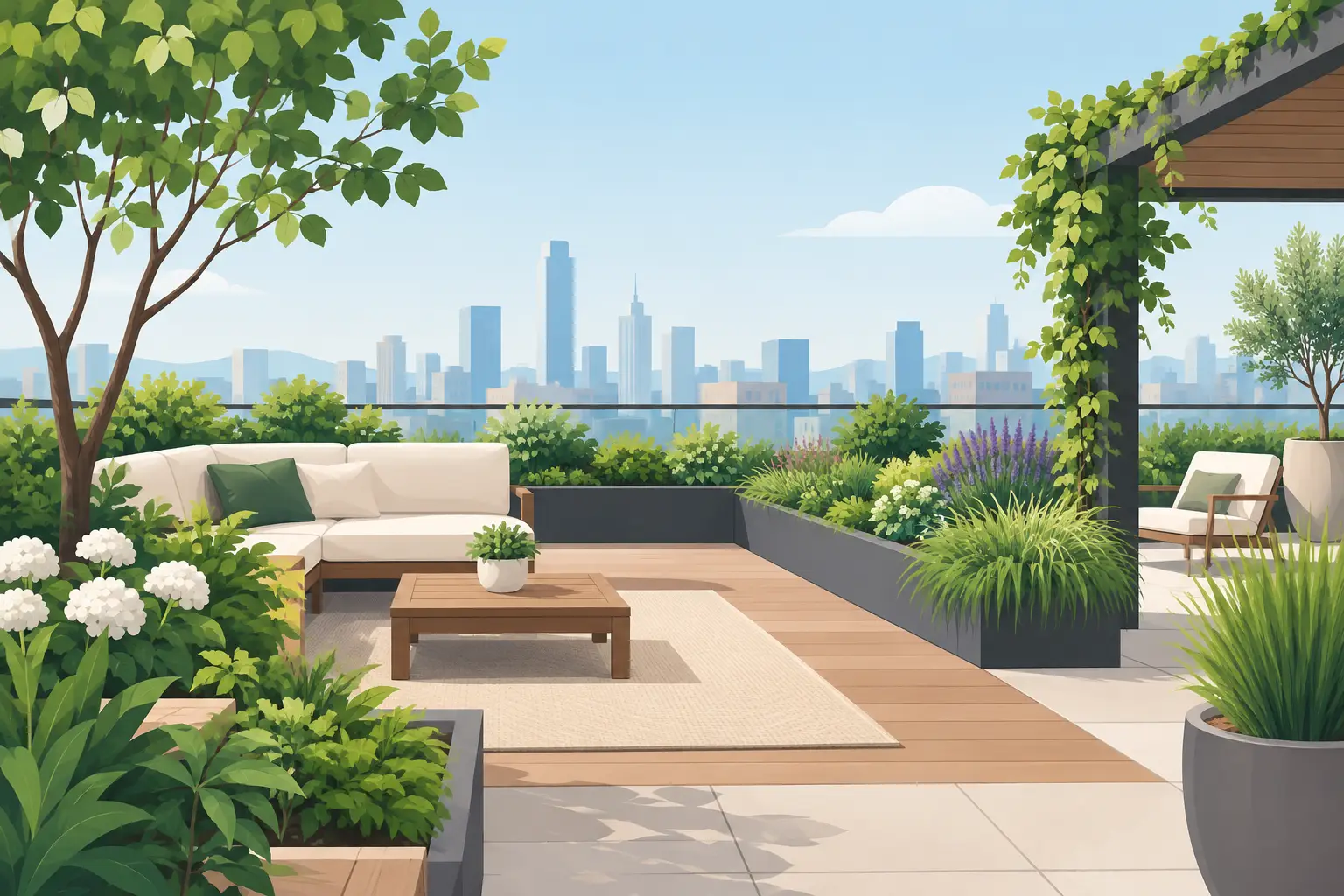
The value of outdoor space is increasingly understood by employers, hospitality businesses and property managers. A place to sit outside for ten minutes can change the rhythm of a working day. A calm, planted view from a reception area can make waiting feel less stressful. Even a modest courtyard can provide a welcome sense of separation from a busy interior.
Wellbeing-led design does not require a large site or elaborate features. It may be as simple as placing seating where it catches morning light, using planting to create a little privacy, adding shade for warmer days, or introducing a water feature where the setting and maintenance allowance make sense.
Seating deserves particular attention. Benches placed purely to fill a gap are rarely used. People are more likely to settle when seating feels protected, has a pleasant outlook and is positioned away from main circulation routes. For staff areas, a mix of sociable tables and quieter corners can support different needs without taking up unnecessary space.
Shade structures and shelters can extend the usefulness of a terrace or courtyard through changing weather. They are especially effective for hospitality venues and workplaces where the outdoor area needs to be dependable, not just attractive on the occasional sunny afternoon.
Low-Maintenance Does Not Mean Lifeless
Many commercial clients want grounds that stay smart without constant intervention. This does not mean covering every surface with artificial grass or gravel. It means designing with a realistic understanding of care.
Low-maintenance landscaping usually relies on clear edges, durable materials, appropriate plant choices and sensible access for gardening work. Irrigation may be worthwhile for certain schemes, particularly where planters or newly established planting need consistent watering. Mulching, well-prepared soil and adequate spacing also reduce pressure on the landscape as it matures.
Artificial grass can be useful in selected areas where a green appearance is needed but natural turf is unlikely to survive. It is not always the most appropriate option, particularly in hot, exposed spaces or locations where biodiversity is a priority. Natural turf may be the better choice for larger areas that can be properly maintained, while paving and planting may suit a heavily used courtyard.
The goal is not to remove nature from the site. It is to create a landscape that remains attractive within the time and budget available to care for it.
A Joined-Up Design and Build Process
Commercial projects benefit from having design and construction considered together. When the people planning the space understand how it will be built, details such as drainage falls, retaining edges, foundations, lighting routes and planting depths are less likely to be treated as afterthoughts.
At Spiritual Gardens, the focus is on shaping outdoor environments around practical beauty and everyday ease. That means listening carefully to how a site needs to perform, then bringing together landscaping, paving, fencing, planting, seating and structural elements in a coherent whole.
For a small commercial frontage, that may mean a refreshed entrance with reliable paths, smart boundary treatment and planting that looks good throughout the year. For a larger site, it may involve phased work that keeps disruption manageable while steadily improving the visitor and staff experience.
A clear programme, sensible material choices and experienced workmanship matter as much as the finished look. Commercial spaces cannot usually be out of action for long, so the build needs to be carefully organised around access, safety and the day-to-day operation of the business.
The most valuable commercial landscape is one that quietly makes life better. It welcomes people without fuss, gives them room to breathe, and continues to look composed long after the work is complete.


Comments