


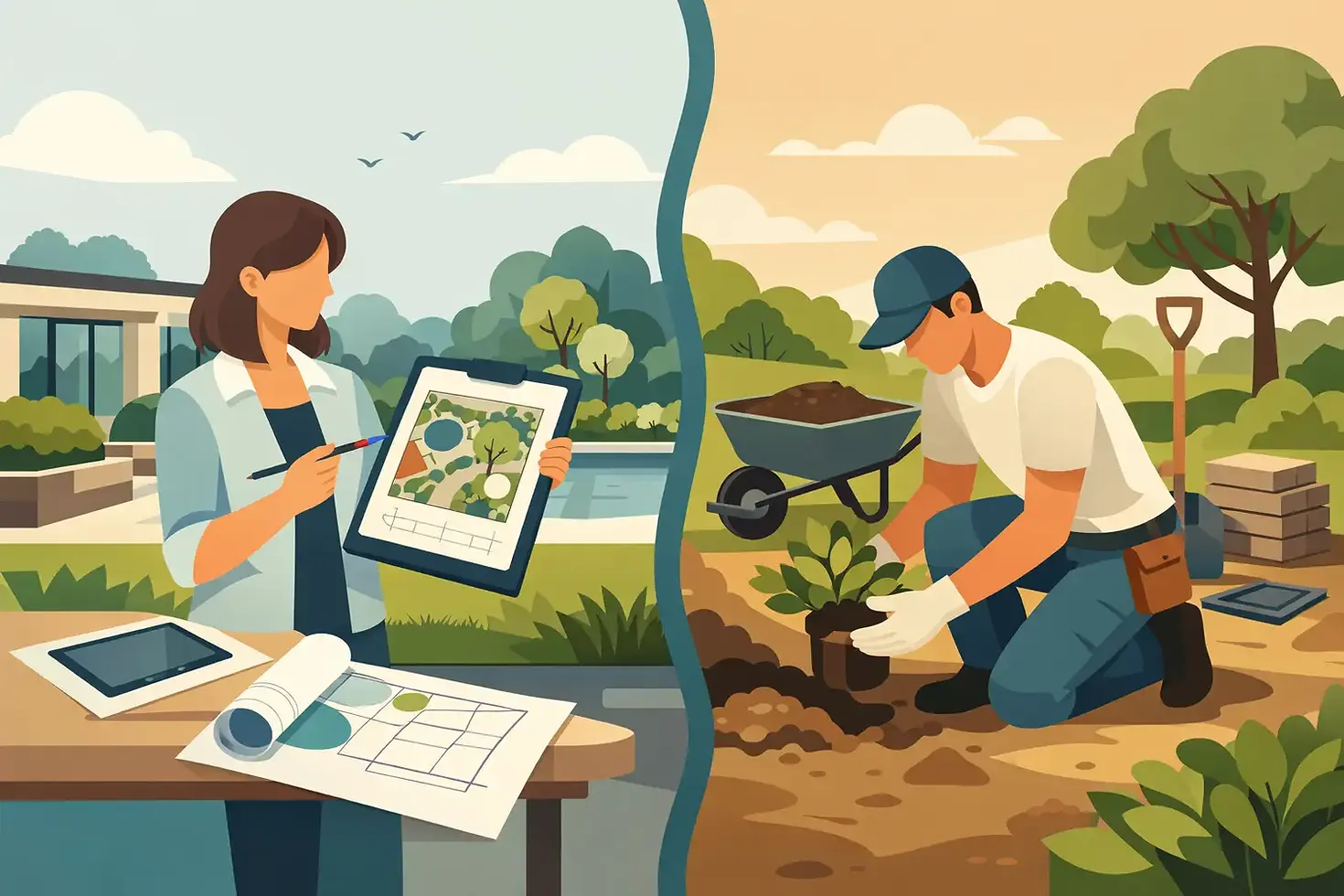
Garden Designer vs Landscaper Explained
- Spiritual Gardens

- Jun 29
- 6 min read
If you are planning a major garden change, the question of garden designer vs landscaper usually appears quite early - often just after you have realised that a few new plants and a pressure wash will not give you the space you actually want to live in. For many homeowners, the confusion is understandable. Both roles shape outdoor spaces, but they do not always do the same job, and choosing the right approach can make the difference between a garden that simply looks tidy and one that feels calm, functional and genuinely easy to use.
Garden designer vs landscaper: what is the difference?
At the simplest level, a garden designer plans the space, while a landscaper builds or installs it. That is the cleanest distinction, but real projects are rarely that neat.
A garden designer looks at how the space should work. They consider layout, movement, views, levels, materials, planting, proportion and the overall atmosphere of the garden. A good designer is not only asking what you want to include, but why you want it. Do you need a quiet seating area away from the house? A family garden that feels orderly without being formal? A low-maintenance front garden that still has warmth and character? Design begins with those questions.
A landscaper, by contrast, is usually focused on construction and implementation. That may include paving, patios, decking, fencing, turfing, raised beds, drainage, planting and structural garden features. A skilled landscaper turns plans into reality. They understand the practical side - foundations, falls, edging details, site preparation, build quality and how materials behave over time in British weather.
The overlap comes because some landscapers offer design, and some garden designers also manage or deliver the build. That is why the title alone does not tell you everything. What matters is the service behind it.
Why the difference matters more than people think
When people imagine a new garden, they often picture the finished result: clean paving, soft planting, somewhere to sit with a coffee, children playing on the lawn, friends gathered on a summer evening. What gets missed is that those moments depend on dozens of earlier decisions.
Without design, a garden can end up as a collection of expensive parts that do not quite relate to each other. The patio may be too exposed. The path may cut awkwardly across the lawn. The planting may look lovely in June and tired for the rest of the year. You may have spent well on construction, but still not have a space that supports the way you live.
Without good landscaping, even the most thoughtful design can disappoint. Materials may shift, drainage may fail, levels may feel clumsy, and finishes may age poorly. The garden might look right on paper but not stand up to daily use.
For homeowners who want a full transformation rather than a patch-up job, both thinking and build quality matter equally.
When a garden designer is the right first step
If your garden feels unresolved, awkward or underused, design should come first. This is especially true if you are changing the layout, introducing new zones, reworking levels, adding built features or trying to make the garden feel more coherent.
A designer is helpful when you know the space is not working, but cannot yet see the answer. Perhaps the garden is overlooked, harder to maintain than you expected, or simply lacking any sense of purpose. Perhaps you have plenty of square footage, but no real place to relax. These are design problems before they are build problems.
The right design process can also protect your budget. It helps you decide where to invest and where to simplify. Not every garden needs elaborate detailing, but every successful garden needs a clear structure.
For clients who value wellbeing and ease of use, design also brings a deeper layer. It considers how the garden feels to move through, where the sun falls, what you see from inside the house, and how to reduce visual noise. Those decisions create calm. They are rarely accidental.
When a landscaper may be all you need
There are projects where a landscaper is the more appropriate choice from the outset. If you already know exactly what you want and the work is relatively straightforward, a capable landscaper may be enough.
For example, you may be replacing tired paving with a like-for-like patio, renewing a lawn, installing fencing, rebuilding a boundary wall or fitting new decking in an existing position. In those cases, the challenge is less about reimagining the space and more about delivering the work properly.
That said, even apparently simple jobs can benefit from some design thinking. A patio replacement might be the right moment to adjust size, orientation or access. New fencing might affect how enclosed the garden feels. Small choices have a habit of shaping the atmosphere of a space.
The most useful question is not who is better
It is tempting to frame garden designer vs landscaper as a contest, but that misses the point. One is not better than the other. They solve different parts of the same problem.
A beautiful garden needs vision and execution. If one is weak, the whole result suffers. Homeowners often come to this realisation after living with a space that has been improved in pieces over time - a patio one year, raised beds the next, new fencing after that - yet still never feels settled.
The strongest outcomes usually happen when design and build are connected from the start. That does not mean they must come from the same company in every case, but it does mean there should be continuity between the concept and the construction.
What to ask before hiring either one
Rather than getting too caught up in job titles, ask practical questions. Do they begin by understanding how you want to use the garden? Can they show examples of completed projects similar in scale and style to yours? Are they confident discussing drainage, materials, planting and long-term maintenance, not just appearance?
If you are speaking to a garden designer, ask how the build stage will be handled. Will they produce detailed plans? Will they oversee the work? Will they coordinate with the contractor?
If you are speaking to a landscaper, ask whether they provide design input or are pricing from an existing brief. If they offer design as well as build, ask to see projects where both were delivered together. The quality of the answer matters more than the label.
It is also worth asking how they approach maintenance. A garden that looks striking in photographs but demands endless pruning, cleaning and seasonal replacement may not suit a busy household. Practical beauty is often the wiser investment.
For larger projects, an end-to-end service often makes sense
For a complete renovation, many homeowners prefer a single team that can guide the process from concept through to completion. This tends to reduce miscommunication, keep the design realistic and ensure that build decisions support the original intention.
That joined-up approach is especially valuable when the garden needs to do several jobs at once. You may want space for entertaining, a sheltered corner to unwind, planting that softens the structure, and materials that feel natural but are not difficult to maintain. Those priorities need balancing carefully.
A design and build service can also give you greater confidence around timelines, budgets and accountability. There is less risk of a gap between what was imagined and what is actually practical on site.
For homeowners across Suffolk and Cambridgeshire, this is often the point where a company such as Spiritual Gardens feels different from a standard contractor. The aim is not only to construct features, but to shape a garden around daily life, visual calm and long-term ease.
Choosing based on your project, not the title
If your garden needs clearer structure, better flow and a stronger sense of purpose, start with design. If you have a clear plan and need skilled hands to carry it out, start with landscaping. If you want a full transformation and do not want the stress of coordinating separate stages, look for a team with genuine strength in both.
The best gardens are not defined by how much has been spent on them or how many features they contain. They work because the space has been thought through with care, then built with discipline. You notice it in the way a path sits naturally, the way a seating area feels sheltered rather than boxed in, and the way the whole garden asks less of you while giving more back.
When you are deciding between a garden designer and a landscaper, it helps to step away from the terminology and return to the life you want the garden to support. That is usually where the right answer becomes clear.


Comments