


12 Best Garden Screening Ideas for Calm Privacy

A garden can be beautifully paved, carefully planted and perfectly proportioned, yet still feel difficult to settle into if it is overlooked. The best garden screening ideas do more than block a neighbouring window or soften a boundary. They shape a sense of enclosure, frame views worth keeping and help the garden feel like a private extension of home.
For homeowners in Suffolk and Cambridgeshire, the right answer often lies in a layered approach rather than one tall, solid barrier. Screening needs to work with the garden’s orientation, soil, maintenance expectations and the character of the property. It should also feel considered from inside the house, where it may be seen every day of the year.
Start with what needs screening
Before choosing a material, be clear about the view you want to change. A first-floor window, a sitting area beside a close neighbour, a busy road and an unsightly shed each call for a different solution. Full-height screening may be necessary in one spot, while a filtered view or a carefully placed focal point will be more comfortable elsewhere.
Think about where you sit, eat and move through the garden. Privacy is most valuable around a patio, deck or garden room, but screening every boundary can make a modest plot feel boxed in. Retaining a glimpse of sky, borrowed greenery or a mature tree beyond the fence gives the space breathing room.
Best garden screening ideas for a balanced garden
1. Slatted timber screens
Horizontal or vertical timber battens bring warmth and clean structure to a contemporary garden. Used as a freestanding screen, fixed in front of an existing fence or incorporated into a pergola, they offer partial privacy without creating a heavy wall.
The spacing is crucial. Narrow gaps maintain a light, open character while interrupting direct sightlines. Wider gaps create more of a visual feature and can be softened with climbers. Timber needs a suitable finish and sound installation to weather well in the British climate, but its natural texture rewards that care.
2. Pleached trees for privacy above the fence line
Pleached trees are one of the most elegant answers to overlooking from neighbouring homes. Their clear stems keep the lower garden open, while the trained canopy forms a living screen at the height where privacy is needed. They work particularly well beside a terrace, along a formal boundary or where an existing hedge would feel too bulky.
Hornbeam is a dependable choice for many local gardens, holding its coppery leaves through much of winter before new growth arrives. Lime can create a more formal avenue, while evergreen options may suit certain settings. Pleaching takes patience, skilled training and regular pruning, so it is best planned as part of the overall garden design rather than added as an afterthought.
3. Layered evergreen planting
A single line of fast-growing conifers may offer quick cover, but it can become dominant, thirsty and difficult to manage. A layered planting scheme produces a softer, more resilient screen. Combine evergreen structure with deciduous shrubs, ornamental grasses and flowering plants to create depth as well as privacy.
For example, yew or Portuguese laurel can provide reliable backbone where conditions suit them, while pittosporum, eleagnus and viburnum add varied leaf shape and colour. Underplanting with shade-tolerant perennials or grasses helps the boundary feel like part of the garden, not simply its edge. The result changes gently through the seasons without demanding constant attention.
4. A hedge with room to grow properly
A well-planted hedge remains one of the most effective low-maintenance screening choices. It absorbs sound better than hard fencing, supports wildlife and sits naturally within both traditional and modern gardens. The key is selecting a species that suits the available width and committing to an achievable pruning routine.
Beech and hornbeam make excellent deciduous hedges, with hornbeam often handling heavier or damper ground more comfortably. Yew gives year-round density and responds well to clipping, although it establishes more slowly. Mixed native hedging offers a relaxed, wildlife-friendly boundary but is less uniform. If space is tight, avoid planting a hedge that will need repeated hard cutting to stay within bounds.
5. Climbers on trellis or wire
Trellis and tensioned wire systems are useful where ground space is limited or a bare wall needs softening. They make a boundary feel taller without the visual weight of a solid panel, and the planting can be tailored to the amount of sun available.
Evergreen jasmine offers scent and foliage in a sheltered position. Clematis brings seasonal flower, while climbing roses lend a more romantic character near seating areas. For year-round coverage, choose carefully and ensure the support is strong enough for the mature plant. A climber that is not regularly guided and pruned can quickly obscure windows, gutters or neighbouring space.
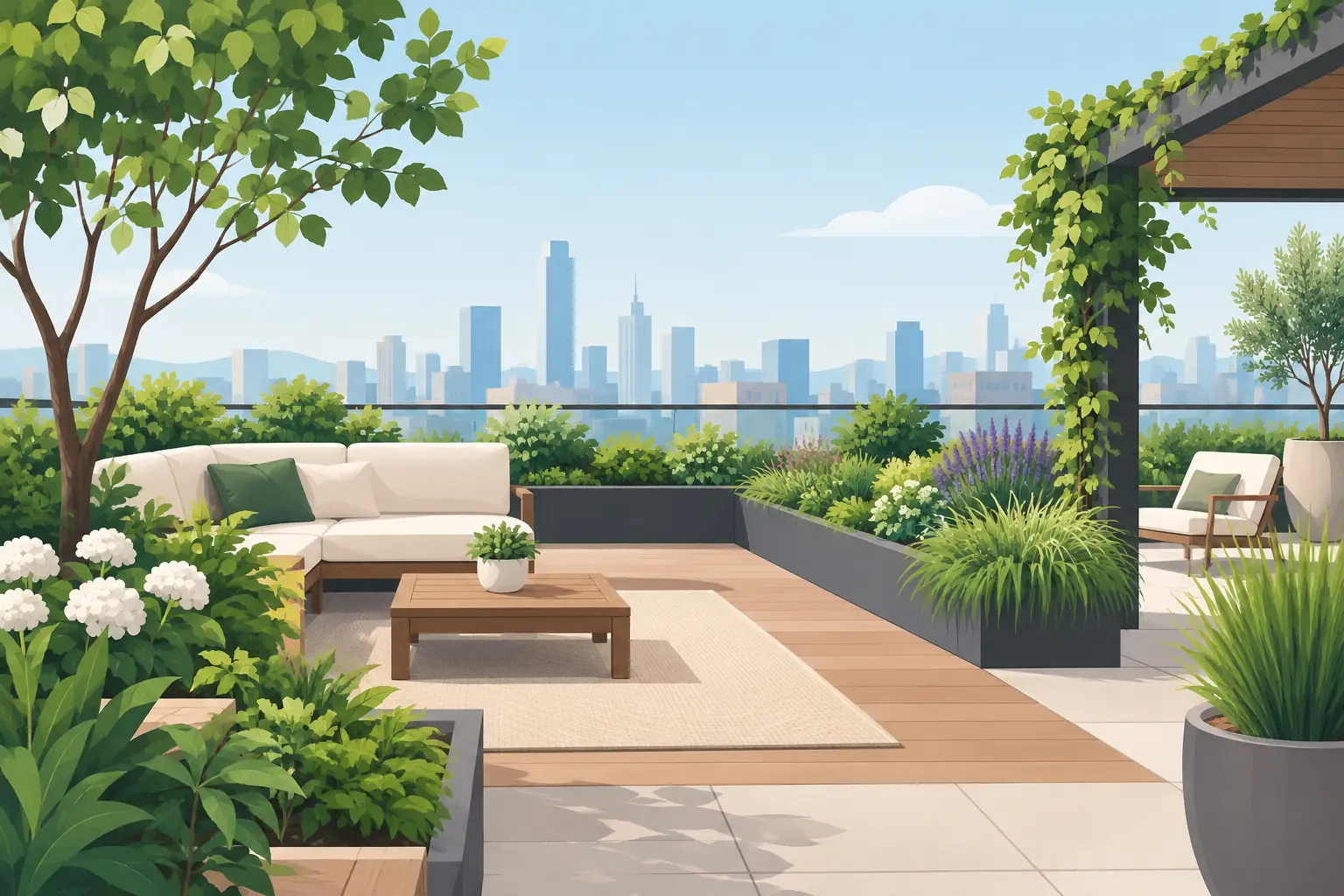
6. Raised planters as living partitions
Raised planters can define a dining area, divide a long garden or create a protected corner without changing the entire boundary. Built in timber, brick or porcelain-clad blockwork to complement the patio, they bring planting closer to eye level and can make a new garden feel established more quickly.
They are particularly valuable where drainage is poor, where soil needs improving or where a terrace sits above the main lawn. Tall grasses, compact evergreen shrubs and structural perennials all work well. However, raised planters dry out faster than open ground, so irrigation or drought-tolerant planting should be part of the plan.
7. Decorative panels as a focal point
Laser-cut metal, woven willow, painted timber or composite panels can offer privacy while adding a clear design feature. These work best in smaller sections: behind a bench, at the end of a path or beside a hot tub or outdoor kitchen. They can direct the eye away from an awkward view rather than trying to hide every inch of it.
Choose a pattern with enough solidity for the level of privacy required. A highly open design may cast beautiful shadows but will not conceal much at night when interior lights are on. Consider the view from both sides, particularly on shared boundaries.
8. A pergola with overhead screening
Overlooking is not always horizontal. In compact gardens, upper-storey windows can make a patio feel exposed even where fences are high. A pergola changes that experience by creating a gentle ceiling over a seating or dining space. Slatted rafters, a retractable canopy or well-managed climbers provide varying degrees of shelter and shade.
This is a strong option for clients who want the garden to support entertaining as well as quieter daily use. It needs careful positioning so it does not darken the house or overwhelm the plot, but when integrated with paving, lighting and planting, it gives the garden a settled, room-like quality.
9. Water and planting to soften noise
Where privacy is affected by traffic or neighbouring activity, screening needs to address sound as well as sight. No garden feature can make a busy road disappear, but dense planting, a solid boundary and the gentle movement of water can make the space feel more peaceful.
A small recirculating water feature close to a seating area creates a soft layer of sound, while grasses and multi-stem trees break up hard reflections from fences and walls. This approach is about improving the atmosphere rather than promising complete noise reduction.
10. Garden buildings as useful screening
A well-positioned garden office, studio, store or summerhouse can conceal an awkward corner and create privacy for a patio at the same time. Unlike a purely decorative screen, it earns its footprint by providing practical storage or an extra place to work and relax.
The building should be considered early, especially where access, foundations, drainage and planning requirements may influence the layout. Its elevations can then be softened with planting, rather than leaving a large blank wall as the final problem to solve.
Choose materials that belong together
The most successful screening feels connected to the rest of the garden. If the patio uses warm sandstone, natural timber and textured planting may feel more harmonious than stark black panels. If the design is crisp and architectural, porcelain paving, dark composite battens and clipped evergreen forms can create a calmer, more contemporary rhythm.
Durability matters as much as appearance. Boundary screens are exposed to wind and rain, so posts, fixings and foundations need to be built properly. Thoughtful construction avoids leaning panels, premature timber movement and planting beds that are too shallow to thrive.
Privacy without a closed-in feeling
Screening works best when it is designed around the moments that matter: morning coffee outside, children playing on the lawn, an evening meal with friends or a quiet place to read. Instead of treating every boundary as a problem, use screening to create layers of calm, then allow planting, light and well-chosen views to keep the garden open.
A considered design can make even an overlooked plot feel more settled and personal. If you are planning a wider garden transformation, arranging a consultation with Spiritual Gardens can help turn privacy requirements into a garden that is practical, enduring and genuinely restorative.


Comments