


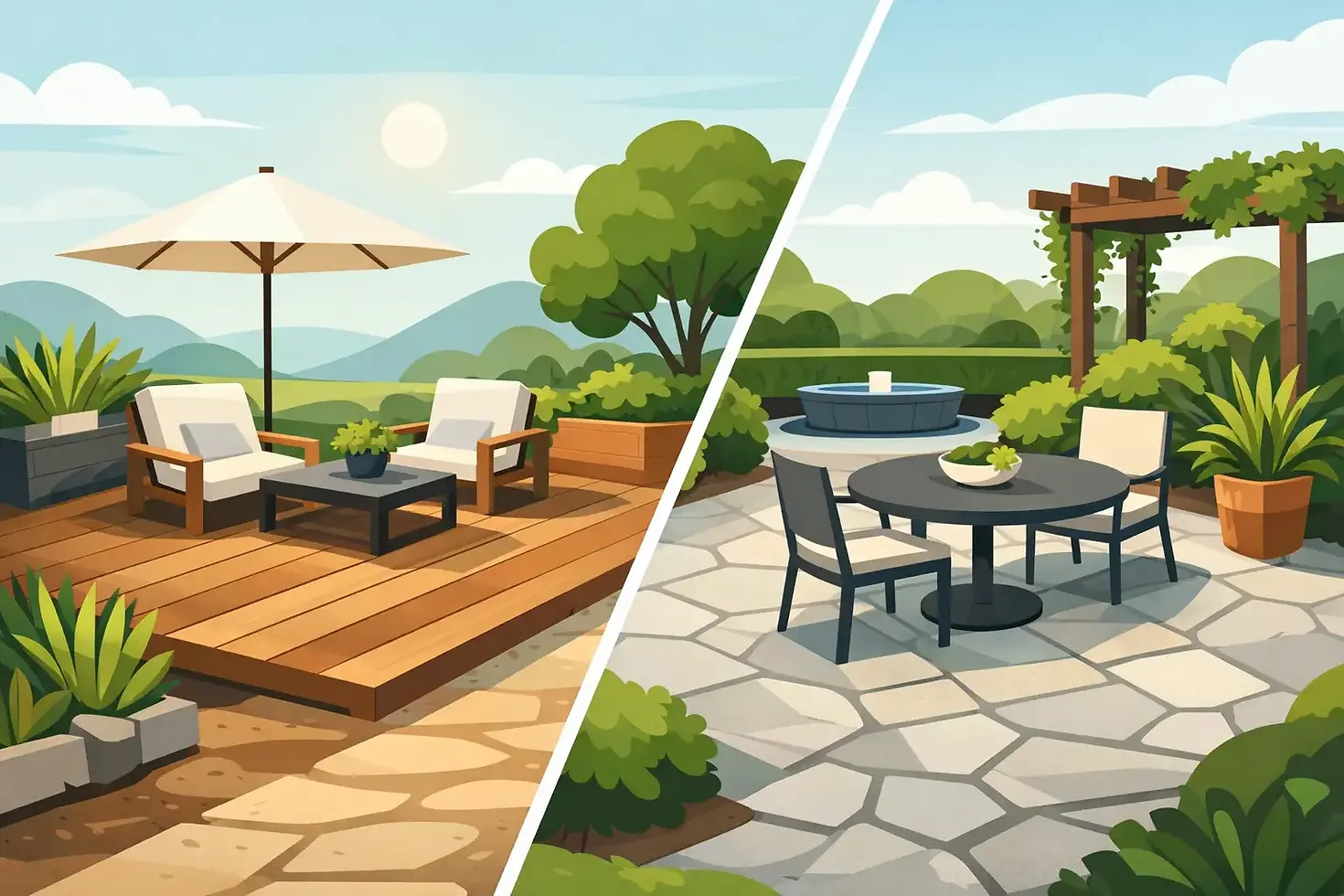
Decking or Patio for Gardens?

The question of decking or patio for gardens usually arrives at the same moment homeowners realise the lawn is not doing enough. Perhaps the space feels exposed, awkward underfoot in winter, or too high-maintenance to enjoy properly. A well-designed surface changes that. It gives the garden structure, creates somewhere to sit and breathe, and often becomes the point around which the rest of the space begins to make sense.
The right choice is rarely about trends alone. It depends on how you want the garden to feel, how you plan to use it, and how much upkeep you are willing to take on over time. For some homes, decking brings warmth, level changes and a more architectural character. For others, a patio offers permanence, simplicity and a quieter visual presence. Both can work beautifully when designed with care.
Decking or patio for gardens - what matters most?
Start with the way you live outside. If your garden is where you host summer meals, watch children play, read in the early evening or step out with a coffee before work, the surface needs to support those habits with ease. Good garden design is not simply about appearance. It should help the space feel usable, balanced and calm.
A patio tends to suit gardens that need a grounded, stable base. It works especially well near the house, where level access, dining furniture and year-round durability matter. Natural stone or porcelain paving can create a clean, timeless setting that sits comfortably with planting, lawns and built features.
Decking is often chosen where the ground is uneven, where a raised seating area would improve the layout, or where a softer visual finish is preferred. Timber and composite boards can make a garden feel warmer and more contained, particularly in contemporary courtyards or spaces that need clear zoning.
The answer is not always one or the other. In many well-resolved gardens, both materials are used together, each in the place where it performs best.
When decking is the better choice
Decking earns its place when levels are part of the challenge. If your garden slopes away from the property or has awkward changes in height, a raised deck can create a usable platform without extensive excavation. That can make the garden feel more intentional from the outset, rather than forcing furniture onto uneven ground.
There is also a certain comfort to decking underfoot. It can feel warmer than stone, both visually and physically, which matters if the aim is a relaxed, informal seating space. In gardens designed for unwinding, that softer character can be very effective.
From a design perspective, decking can define a destination within the garden. A tucked-away seating platform, a space around a garden building, or a transition zone between indoors and outdoors can all benefit from the clean lines of boards. It is especially useful when you want to create layers in the layout without making the space feel overbuilt.
That said, decking is not maintenance-free. Traditional timber needs regular care to preserve its appearance and reduce weathering. Even composite options, while lower maintenance, still need thoughtful specification and installation to avoid movement, staining or an overly artificial finish. In shaded gardens, slip resistance also needs proper attention.
When a patio is the stronger option
A patio is often the most practical choice for busy family gardens and for homeowners who want lasting results with less ongoing care. Laid correctly, a good patio provides a stable, hard-wearing surface for dining, entertaining and day-to-day use. It also tends to sit more quietly in the landscape, allowing planting and structure to take centre stage.
For gardens with a direct relationship to the house, paving usually feels the most natural continuation of the architecture. It can extend the visual line of an open-plan kitchen, support large tables and planters, and give the garden a settled, established quality. This is particularly valuable when the goal is a space that feels calm rather than busy.
Patios also offer more variety in texture, tone and pattern than many people expect. Natural sandstone brings character and softness. Porcelain offers a more refined, contemporary finish with excellent durability. Clay pavers and setts can introduce detail without becoming fussy. The best material depends on the property, the surrounding planting and how much visual warmth you want in the scheme.
The trade-off is that patios need careful groundwork. Poor preparation leads to movement, drainage issues and a finish that never feels quite right. In small gardens especially, paving should be proportioned with care so the space does not become overly hard or stark.
Upkeep, lifespan and daily ease
For many homeowners in Suffolk and Cambridgeshire, the real decision comes down to maintenance. A beautiful garden is of limited use if it becomes another job on the weekend list.
Patios are generally easier to look after in the long term, provided the material is chosen well. Porcelain is particularly straightforward, with low porosity and a clean finish that suits contemporary gardens. Natural stone can require more occasional attention, but many clients value the slight weathering and variation that develops over time.
Decking asks for a little more awareness. Timber can silver, warp or become slippery if neglected. Composite reduces much of that burden, but quality matters. Lower-grade products can fade or feel less convincing up close. Installation details matter just as much as the board itself, because gaps, framing and airflow all affect longevity.
If low maintenance is a priority, that does not mean the answer will always be patio. It means the design should match your tolerance for upkeep from the beginning. A lower deck in a sunny spot may be perfectly manageable. A timber deck beneath overhanging trees may not be.
Style, atmosphere and how the garden feels
This is where the decision becomes more personal. Materials shape mood.
Decking often creates a sense of retreat. It can feel intimate, layered and slightly softer in character, particularly when paired with screening, grasses, timber structures or built-in seating. In the right setting, it supports a more cocooned atmosphere - ideal for reading, quiet mornings or evening use.
A patio tends to create openness and clarity. It can make a garden feel more expansive, more settled and easier to navigate. With thoughtful planting around the edges, it offers a strong framework without demanding attention for itself.
There is no universal rule that says one is more modern or more traditional. Both can work across different property styles. What matters is proportion, detailing and the relationship to the house. A period home may suit a beautifully laid stone terrace far better than prominent decking. A contemporary extension may benefit from the crispness of porcelain paving or the warmth of a carefully detailed composite deck. The best schemes feel coherent rather than fashionable.
Can you combine decking and patio in one garden?
Yes, and often to very good effect. In larger or more complex layouts, combining materials can help separate functions without cluttering the design. A patio near the house can handle dining and circulation, while a deck further out creates a quieter seating area or frames a focal point such as a water feature or garden room.
The key is restraint. Too many materials can make a garden feel fragmented. If both decking and paving are used, they need a clear reason for being there and a strong visual relationship with each other. Tone, scale and layout should feel considered as one composition.
This is where design-led planning makes such a difference. Rather than asking which material is best in isolation, it is often better to ask what each part of the garden needs to do. Once that is clear, the right answer usually follows.
Choosing well for your home
If you are weighing up decking or patio for gardens, begin with function, then refine through style and maintenance. Think about sunlight, drainage, levels, furniture, and how you actually want to spend time outside. A garden that supports calm and ease is rarely built on a snap material choice. It comes from understanding the whole space.
At Spiritual Gardens, that is often where the most successful projects begin - not with a product, but with a conversation about living well outdoors. When the layout, materials and purpose align, the result feels effortless.
A garden surface should do more than fill space. It should help the garden hold you a little better, whether that means slow mornings on stone warmed by the sun or a raised deck that catches the last light of the day.


Comments