


How to Create Outdoor Privacy That Feels Natural

The moment a neighbouring window overlooks your patio, even a beautifully finished garden can feel less like a retreat and more like a room without curtains. Learning how to create outdoor privacy is not simply about blocking a view. Done well, it shapes a garden that feels sheltered, calm and genuinely comfortable to use, whether you are drinking coffee outside, sharing a meal with friends or taking a quiet moment at the end of the day.
The best solutions balance seclusion with light, space and character. A tall solid boundary may stop overlooking, but it can also make a compact garden feel enclosed or cast unwanted shade. Thoughtful garden design considers where privacy is needed, from which direction, and at what time of year, then uses structure, planting and layout to create a more natural sense of refuge.
How to create outdoor privacy without closing in your garden
Start by looking at the garden from the places you actually use. Stand at your dining table, on the main seating area and by the back door. Notice the sightlines: perhaps it is the first-floor bedroom next door, a shared driveway, a busy footpath or a neighbour's raised deck that makes you feel exposed. Privacy does not always need to run around the full perimeter. Often, a carefully positioned screen or a layered planted border can solve the issue while keeping the garden open elsewhere.
It also helps to decide what kind of privacy matters most. Screening a direct view across a boundary calls for a different approach from softening noise, sheltering a windswept corner or creating a more intimate entertaining space. When every element has a purpose, the result feels composed rather than defensive.
Create a private destination within the garden
One of the most effective design choices is to move the seating area away from the most exposed edge. A terrace immediately outside the house is practical, but it may sit directly in view of neighbouring properties. A second seating space further into the garden can feel much more secluded, particularly when it is framed by planting, a pergola or a change in level.
This does not require a large plot. In a smaller Suffolk or Cambridgeshire garden, even a modest bench beneath a canopy, beside a water feature or tucked into a planted corner can create the feeling of a separate outdoor room. A path, a change in paving direction or a simple arch can make the journey to that space feel intentional.
The practical advantage is that you are not relying entirely on boundary screening. The garden itself begins to guide the eye and create a sense of enclosure, while retaining daylight and a welcome feeling of depth.
Use layered planting for soft, year-round screening
Planting is often the most restful way to create privacy. Unlike a bare fence panel, foliage has texture, movement and seasonal interest. It can soften hard boundaries, reduce the visual impact of neighbouring buildings and bring birds and pollinators closer to the garden.
For reliable screening, avoid relying on one row of plants unless space is very limited. A layered border usually gives a fuller, more considered result: taller evergreen structure at the back, flowering or deciduous shrubs through the middle, and lower planting near the front. This creates depth and avoids the uniform appearance of a solid green wall.
Evergreen hedging can be an excellent choice where privacy is needed throughout winter. Yew, Portuguese laurel, holly and certain varieties of photinia can work well, depending on soil, available width and the desired finished height. In tighter spaces, upright forms and trained climbers may be more suitable than a broad hedge. Bamboo can provide quick screening and a gentle rustling sound, but it should be selected carefully and contained appropriately. Clump-forming varieties are generally the safer choice for residential gardens.
Deciduous trees and multi-stem shrubs also have an important role. Their branching structure still breaks up views in winter, while their leaves bring shade and softness through summer. Amelanchier, birch and pleached trees can be particularly effective where the problem is overlooking from above rather than a view at ground level. Pleached trees hold a clear stem beneath a trained canopy, allowing light and movement below while forming a living screen at the precise height it is needed.
Planting needs time to establish, so this approach rewards patience. For homeowners who want more immediate seclusion, mature specimens or a combined planting-and-screening scheme can offer a stronger result from day one.
Add screens where they will make the greatest difference
Garden screens are useful when privacy is needed quickly or in a very specific location. They work especially well beside a dining area, hot tub, garden office or side passage, where a full fence would be unnecessary. Timber slats, contemporary composite panels, woven willow, metalwork and decorative trellis can all be used to suit the character of the property.
The key is proportion. A screen that is too tall, too wide or too solid can feel imposing, particularly close to the house. Slatted timber allows light and air to pass through while interrupting a direct view. Trellis can be softened with climbers such as jasmine, clematis or evergreen trachelospermum, creating privacy that becomes more natural with each season.
Where possible, repeat materials already used in the garden. A timber screen that relates to decking, a pergola or built-in seating will feel like part of the design rather than an afterthought. Good construction also matters. Privacy features are exposed to wind and weather, so proper footings, durable fixings and quality timber treatment are essential to their longevity.
Before installing a high fence or structure, check the relevant planning guidance and speak with neighbours where appropriate. Boundary height rules, conservation considerations and shared responsibilities can affect what is possible. A professional garden design process can identify these issues early, before materials are ordered or work begins.
Use pergolas and shelters to filter overlooking
Privacy is not only about what happens at eye level. In many gardens, the uncomfortable view comes from above. A neighbour may look down from an upstairs room, balcony or raised patio, leaving the main terrace feeling exposed despite tall boundary fencing.
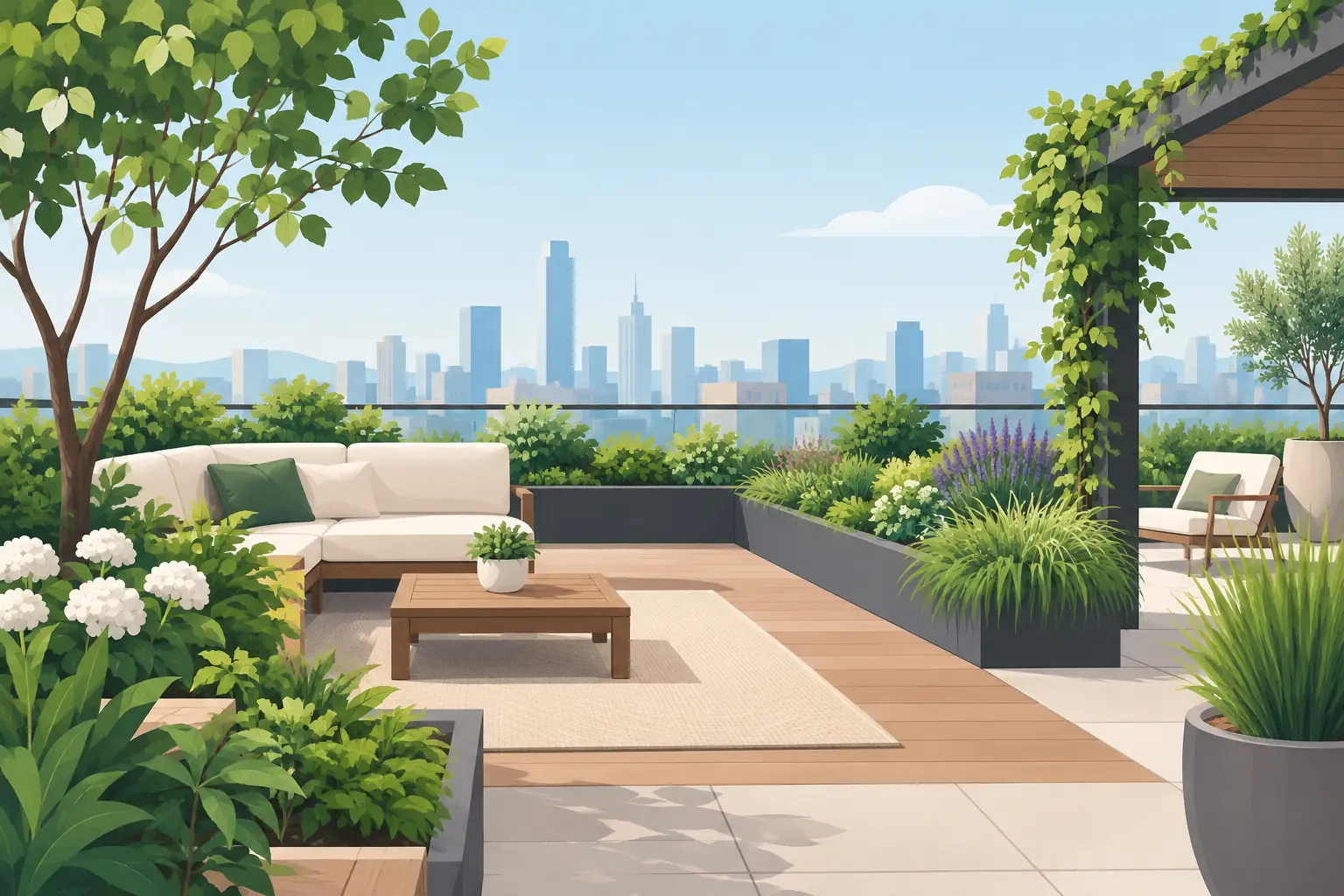
A pergola, canopy or garden shelter can make a substantial difference without turning the seating area into a dark enclosed structure. Open rafters soften the direct sightline, while climbers, slatted roof sections or carefully placed fabric shades can provide additional cover. It is a particularly useful choice for an entertaining space, as it creates definition, shelter and a stronger sense of occasion at the same time.
Consider the sun before adding overhead screening. A south-facing terrace may benefit from shade during the hottest part of the day, but a north-facing garden needs every available patch of light. The right solution depends on orientation, surrounding buildings and when you are most likely to use the space.
Make boundaries feel intentional, not imposing
Fencing remains a practical foundation for many gardens, especially where security, pets or clear property lines are priorities. Yet it does not need to be visually dominant. A dark-painted fence can recede behind planting, making greenery appear more vivid. Horizontal boards can make a narrow garden feel wider, while vertical details can add height to a low or enclosed space.
Rather than treating every boundary identically, use the fence where it is needed and allow planting, screens or garden buildings to take over elsewhere. A simple run of fencing may be enough along one side, while the end of the garden could become a planted backdrop for a bench or a garden room. This variation gives the space rhythm and helps privacy feel built into the landscape.
Sound can also influence how private a garden feels. Planting will not completely block traffic or conversation, but layered foliage can soften the atmosphere. The gentle sound of moving grasses, leaves or water can help draw attention away from a nearby road and make a seating area feel more settled.
Choose a low-maintenance approach that will last
A private garden should not become another demanding task on the weekend list. Choose plants that suit the conditions instead of forcing a high-maintenance scheme into difficult soil, shade or exposure. Allow enough planting width for shrubs to mature, and plan access for pruning, fence treatment and cleaning around structures.
Artificial grass, paving and decking can reduce some routine upkeep around a seating space, but they need to be balanced with planting to avoid a hard, exposed feel. Even a narrow border, raised planter or climber-covered screen can bring warmth and calm to a practical surface. The aim is not to fill every view, but to give the eye somewhere restful to land.
At Spiritual Gardens, privacy is considered as part of the wider experience of the garden: where you pause, how you move through the space, what you see from indoors and how easily the garden can be enjoyed over time. A well-designed screen or border should feel as though it has always belonged there.
The most successful private gardens do not announce their boundaries. They create a quiet sense of being held by the space, leaving you free to enjoy fresh air, conversation and stillness without feeling overlooked.


Comments