


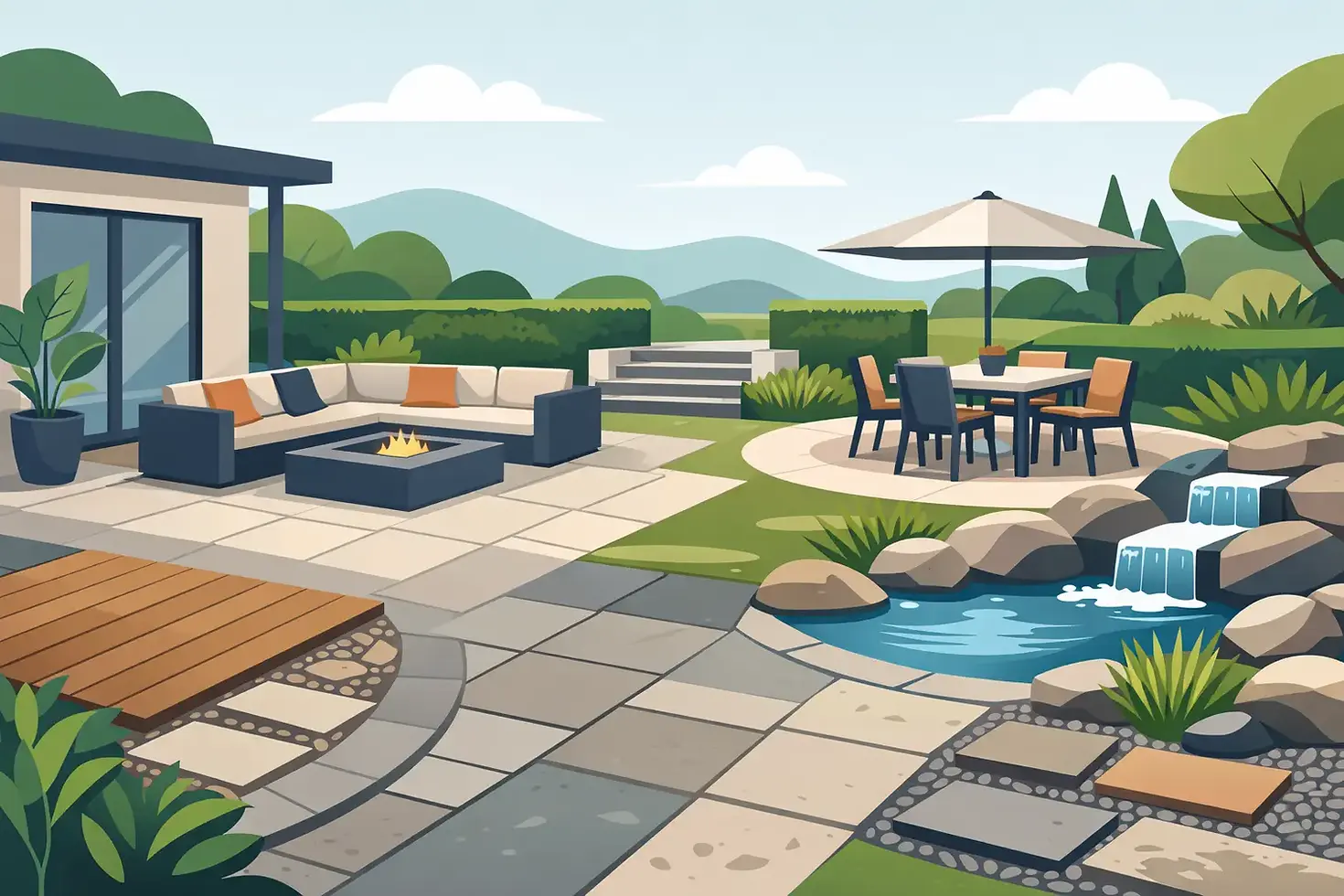
Patios Paving and Hard Landscaping Ideas

A garden often stops being used for one simple reason - it does not feel easy to inhabit. The paving is awkward underfoot, the patio catches too much sun, drainage is poor, or the layout never quite supports the way the household wants to relax. That is why patios paving and hard landscaping matter so much. They do far more than finish a garden visually. They shape how the space feels, how it functions, and how often it becomes part of daily life.
For many homeowners in Suffolk and Cambridgeshire, the goal is not simply to install a patio and add a few borders. It is to create an outdoor space that feels settled, low-maintenance and genuinely restorative. Good hard landscaping provides that structure. It gives the garden rhythm, clarity and purpose, while making room for planting, seating, dining and movement in a way that feels natural.
What patios paving and hard landscaping really do
The phrase can sound technical, but the idea is straightforward. Patios, paving and hard landscaping refer to the built elements of the garden - surfaces, retaining walls, paths, steps, edging, raised planters, seating areas and other permanent features. These are the bones of the space. If they are right, the garden feels coherent. If they are wrong, even beautiful planting can feel temporary or disconnected.
A well-designed patio creates a place to pause. A carefully positioned path changes how you move through the garden. Level changes, walls and built-in seating can add privacy, define zones and make a larger plot feel more welcoming. Hard landscaping is not separate from the softer side of the garden. It is what allows planting and lifestyle use to work together.
This is particularly important in gardens that need to balance several demands at once. A family may want somewhere to eat outside, children may need room to play, and the owners may still want a quiet corner that feels calm at the end of the day. Thoughtful structure makes that possible without the garden feeling crowded.
Start with lifestyle, not slabs
One of the most common mistakes in patios paving and hard landscaping is choosing materials too early. Stone, porcelain and brick all have their place, but the material should follow the purpose. Before selecting finishes, it helps to think about how the space will actually be used.
If you enjoy long summer meals outdoors, the patio needs enough space around the table for chairs to move comfortably. If the garden is mainly a place for morning coffee or evening calm, the scale and position may be more intimate. If low maintenance is essential, detailing matters just as much as appearance. Narrow gravel joints, awkward corners and poor drainage can all create work later on.
Orientation also plays a part. A south-facing patio may need shade or a secondary seating area elsewhere. A narrow side return may benefit from lighter paving to reflect light. A family garden may need direct routes from the house to the lawn, while a courtyard can feel more generous with diagonal lines or larger paving units. The point is not to follow a trend. It is to shape the space around real habits.
Choosing materials for comfort and character
The best paving material depends on the look you want, the level of upkeep you are comfortable with and the character of the property. There is no universal best option. There is only the right fit for the setting and the way the garden will be used.
Natural stone remains a popular choice because it brings variation, texture and a softer visual quality. Sandstone can feel warm and relaxed, while limestone often gives a more refined, contemporary finish. These materials sit comfortably in both traditional and modern gardens, although they do need careful installation and, in some cases, occasional maintenance to keep them looking their best.
Porcelain has grown in popularity for good reason. It is crisp, durable and typically easier to clean, which appeals to homeowners looking for a more low-maintenance surface. It works especially well in contemporary designs, but it needs precise preparation and installation. A poor sub-base or rushed laying will show quickly, no matter how premium the tile appears.
Brick and clay pavers offer something different again. They bring warmth, pattern and a sense of age that can suit period homes particularly well. They are often effective for pathways, edging and courtyards where a more detailed finish is wanted. Gravel also has a place, especially in informal gardens or areas where permeability is important, though it is not always ideal for every user or every route.
Why layout matters more than size
A larger patio does not automatically create a better garden. In fact, oversizing hard surfaces can make a space feel flat, exposed and less comfortable. The strongest gardens usually balance open areas with enclosure, movement and softness.
A main patio near the house often works best as an extension of the indoor living space. Beyond that, secondary paths, smaller terraces or a tucked-away bench area can create a more layered experience. This is where hard landscaping becomes especially valuable. Retaining walls can turn a slope into usable levels. Raised beds can frame a seating area while reducing border maintenance. Steps can slow the transition from one zone to another and make the garden feel intentional rather than purely functional.
There is also an emotional aspect to layout. People tend to relax more easily in spaces that feel proportioned and sheltered. A seating area with some definition around it - through planting, low walls, screens or level changes - often feels calmer than one placed in the middle of an open expanse. Good design understands that practical use and wellbeing are closely connected.
Drainage, groundworks and build quality
Beautiful paving can disappoint quickly if the unseen work is poor. Ground preparation is what allows patios and hard landscaping to last, drain properly and remain safe over time. This is one area where craftsmanship matters enormously.
The sub-base, levels, falls and drainage strategy all need to be considered carefully. Water should move away from the property in a controlled way, without creating puddles or instability. In some gardens, that may mean discreet drainage channels. In others, permeable areas and careful grading will do the job. The right solution depends on the site.
This is also why one quote can differ greatly from another. Two patios may look similar at first glance, but the quality of excavation, edge restraint, bedding and finishing can be very different. For homeowners investing in a full garden transformation, build quality protects both the appearance of the space and the value of the investment.
Blending hard landscaping with planting
The most successful gardens never feel dominated by hard materials, even when the structure is substantial. Planting softens edges, adds movement and brings the seasonal dimension that makes a garden feel alive. Hard landscaping should support that softness, not compete with it.
Raised planters can make maintenance easier while creating visual depth. Wide border edges can prevent paving from feeling stark. Built seating can be softened with surrounding grasses, shrubs or scented planting. Even in a more architectural garden, a balance between solid surfaces and living material tends to create a more settled atmosphere.
This is where a joined-up approach makes a difference. When the patio, paths, walls and planting are designed together, the result feels calmer and more coherent. At Spiritual Gardens, that balance is central to the way outdoor spaces are shaped - not as disconnected features, but as environments designed for ease, beauty and everyday use.
A low-maintenance garden still needs thought
Many homeowners ask for low maintenance, but that should never mean lifeless or overly paved. The better approach is to reduce unnecessary effort while keeping the garden welcoming and full of character.
That might mean choosing paving that is easy to clean, using strong edging to keep borders neat, or designing planting beds that are generous rather than fiddly. It may also mean selecting durable materials that weather well and suit the property, rather than following short-lived fashions. Low maintenance is usually achieved through sensible planning, not by stripping the garden back too far.
When patios paving and hard landscaping are handled well, the result is a garden that asks less of you and gives more back. It supports quiet mornings, shared meals, easy movement and a stronger connection to the outdoors. And that is the real value of the work. Not just a finished surface, but a space that feels grounded, useful and deeply comfortable to spend time in.
If you are considering a new patio or a wider garden transformation, it helps to look beyond materials alone and think about the life you want the space to support. The right structure can change not only how your garden looks, but how it feels to come home to it.


Comments