


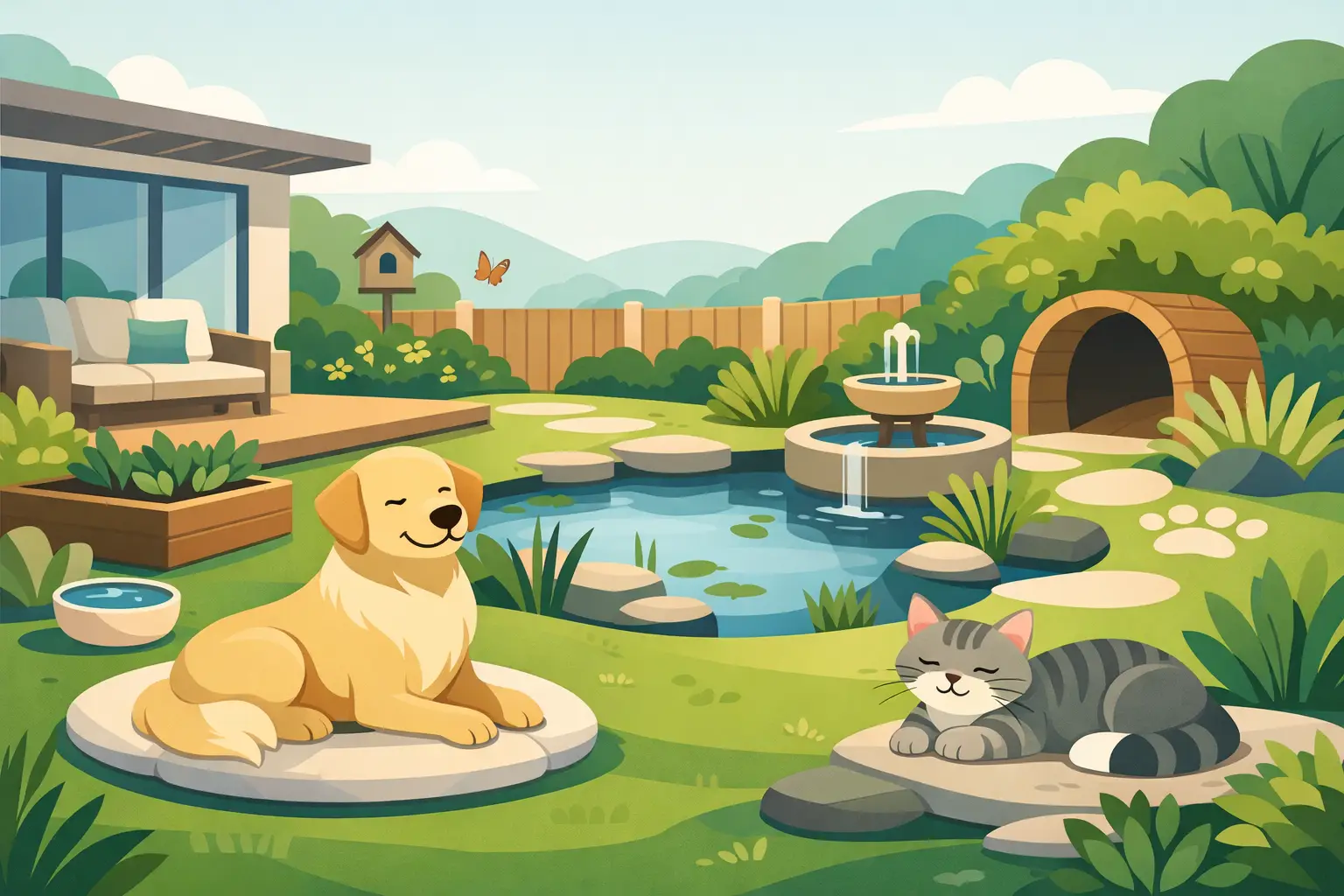
Pet Friendly Garden Design for Calm Homes

A garden should not become off-limits the moment the dog comes racing through the back door. Nor should it demand constant repair after a favourite digging spot, a muddy circuit around the lawn or a cat’s determined route beneath the shrubs. Thoughtful pet friendly garden design makes room for these everyday behaviours without losing the sense of calm, beauty and order that makes an outdoor space restorative.
For many households, the best garden is one that works equally well for a quiet morning coffee, children’s play, summer entertaining and the animals who share the home. The answer is rarely to cover every inch with artificial grass or remove planting altogether. It is to understand how your pets use the space, then shape the layout, materials and planting around real life.
Start with how your pet moves through the garden
Dogs and cats do not experience a garden in the same way as people. A dog may patrol the boundary, sprint from the patio to the gate or repeatedly travel the same route along a fence. A cat may seek a sunny, sheltered perch, a concealed route through planting or a secure place to watch the world beyond the garden. These habits should inform the design from the outset.
Before planning begins, notice where paws naturally go. A worn line in the lawn is useful information, not necessarily a problem to fight. In a well-designed garden, a discreet gravel or paved run can follow that route, protecting borders and avoiding the permanent muddy track that often appears through winter.
The size, age and temperament of your pet matter too. A large, energetic dog needs more durable open space than a small older dog that mostly wants a comfortable spot beside the family. A house cat that only uses the garden under supervision has different needs from a confident cat that climbs, explores and tests every boundary. Designing for the pet you have, rather than an idealised image of one, leads to a garden that remains enjoyable for everyone.
Build a pet friendly garden design around zones
Zoning helps a garden feel purposeful rather than compromised. Instead of asking one lawn or patio to do everything, separate active use from quieter areas. This also makes maintenance more manageable and preserves the visual balance of the garden.
A durable entrance area by the back door is particularly valuable. This is where wet paws, muddy boots, leads and garden furniture tend to gather. Porcelain paving, natural stone or carefully laid brick can provide a practical threshold, especially when paired with good drainage and a tap nearby for a quick rinse after a walk.
Beyond the patio, many family gardens benefit from a clear play and exercise area, with planted borders and seating set slightly away from the busiest movement. This need not be a large expanse of lawn. A smaller, well-drained lawn can be more useful than a bigger one that becomes muddy, patchy and difficult to maintain. For dogs that enjoy digging, it can be kinder and more realistic to create a designated loose-soil corner than to continually protect every flower bed.
A quieter retreat is equally important. A sheltered bench, covered seating area or simple raised deck gives people a place to pause, while pets often settle nearby once they feel included rather than shut out. Shade should be planned as carefully as sunshine, particularly in south-facing gardens where paving can become very hot under paws during summer.
Choose surfaces for paws, drainage and daily life
The right surface depends on the garden’s use and your pet’s habits. There is no single perfect material, but a combination usually performs best.
Natural lawn feels good underfoot and provides a softer place for dogs to play, yet it can struggle where there is heavy traffic or repeated urine marking. Improving drainage, choosing hard-wearing turf and giving the lawn time to recover can make a considerable difference. In compact or shaded gardens, grass may never thrive without ongoing attention, so it is worth being honest about the level of maintenance you want.
Artificial grass can offer a tidy, green appearance and avoids muddy paws, but it needs a well-prepared base and effective drainage to be successful. It also requires regular cleaning where pets use it frequently, and it can become warm in direct sun. It is often best reserved for the areas where its practical benefits genuinely outweigh the desire for living lawn, soil and planting.
Paving creates reliable circulation and makes cleaning easier, but avoid highly polished finishes that can be slippery when wet. Textured porcelain, sawn stone with an appropriate finish, or brick paving can create a secure walking surface while still feeling considered and natural. Gravel works well for pathways and lower-traffic areas, although sharp or loose stones are less suitable for sensitive paws and enthusiastic runners. If gravel is used, select a comfortable, rounded aggregate and ensure it is properly contained.
Whatever materials are chosen, drainage is essential. Standing water creates slippery surfaces, muddy lawns and unhealthy conditions for planting. A well-built garden considers falls, drainage channels and permeable areas from the beginning rather than treating water as an afterthought.
Plant generously, but with care
A pet-friendly garden does not have to be sparse. Planting is central to the softness, privacy and seasonal interest that help a garden feel like a place to breathe. The key is to protect plants from damage and make informed choices about what is growing within reach.
Raised beds are an elegant solution for many gardens. They lift delicate planting away from energetic paws, give borders more structure and can double as informal seating when finished with a timber or stone coping. Wider, layered borders also cope better with occasional exploration than narrow strips of planting pressed against a fence.
Avoid relying on plants that are known to be harmful if eaten, particularly where a dog or cat is prone to chewing. Common garden plants including yew, foxgloves, lilies, daffodils and azaleas can present risks. Lilies deserve particular caution in gardens used by cats. This is not a complete list, and the right choices depend on the species already in the garden and your animal’s behaviour, so discuss any concerns with a vet before making decisions.
In practice, placement matters alongside plant selection. Keep compost heaps, bulbs, fertilisers and slug pellets inaccessible, and avoid using cocoa mulch in areas a dog can reach. Choose pet-conscious lawn and weed treatments, following the manufacturer’s instructions on application and access times. A calm garden should not depend on products that make you worry every time the dog sniffs a border.
Make boundaries secure without making them severe
A secure garden gives pets freedom and gives owners peace of mind. Fencing should be assessed for gaps at ground level, loose panels, weak gates and climbing opportunities created by bins, planters or stacked logs. A determined dog can exploit surprisingly small openings, while cats may need a more considered approach if containment is a priority.
Security need not mean a harsh perimeter. Timber fencing can be softened with climbers and evergreen planting, while trellis adds height and a sense of enclosure without closing off light. In smaller Suffolk and Cambridgeshire gardens, this layered approach can create privacy from neighbours while maintaining an open, restful feel.
Gates deserve the same attention as fences. Self-closing hinges or reliable latches can be worthwhile in busy family homes, particularly where children may forget to shut the gate fully. If a driveway or road is nearby, a secondary internal gate can create a useful buffer between the garden and the exit point.
Plan for a garden that stays easy to enjoy
The most successful gardens do not merely survive pets - they continue to look good with ordinary use. That means allowing enough access for mowing, pruning and cleaning, choosing resilient materials, and not placing fragile features in the centre of an obvious running route.
It also means accepting that a lived-in garden will occasionally show signs of life. A paw print on paving after rain or a dog asleep beside a lavender border is not a failure of the design. With the right framework, those moments belong in the garden rather than detract from it.
At Spiritual Gardens Ltd, the aim is always to create outdoor spaces that support the way a household truly lives. A considered pet friendly garden design can protect your investment, reduce day-to-day maintenance and still leave room for generous planting, natural materials and peaceful places to sit. When the garden works for every member of the household, it becomes somewhere you can use more often and enjoy more fully.



Comments