


How to Create Outdoor Seating Zones

A garden rarely feels settled when all the seating is pushed into one corner and expected to do everything. The spaces that work best are usually the ones with purpose - a quiet spot for morning coffee, a table for supper, a sheltered seat that catches the last of the evening light. If you are wondering how to create outdoor seating zones, the answer starts with how you want the garden to support daily life, not just how you want it to look from the house.
Well-planned seating zones make a garden feel larger, calmer and easier to use. They help shape movement, give each area a role, and prevent the whole space from becoming one open, underused expanse. In practical terms, they also make entertaining simpler and family life more comfortable. In design terms, they bring balance.
Why seating zones matter in a well-designed garden
A seating zone is more than a paved patch with a chair on it. It is part of the layout, tied to sunlight, privacy, materials and how people naturally move through the space. When these decisions are made with care, the garden begins to feel intuitive.
This matters especially in modern family gardens, where one space often needs to work hard. You may want room for children to play, a place to host friends, and somewhere to sit quietly at the end of the day. Trying to force all of that into one patio usually leads to compromise. Breaking the garden into seating zones lets each part do its job properly.
There is also a wellbeing aspect. Different moods suit different settings. A dining terrace near the house feels social and active. A bench beneath a tree feels still and private. A lounge area beside planting softens the edge between indoor and outdoor living. Good garden design recognises that people use outdoor space in different ways across the day and across the seasons.
How to create outdoor seating zones from the layout outwards
The strongest layouts begin with observation. Before choosing furniture or paving, look at where the sun falls, which parts feel exposed, where neighbours overlook the garden, and how you already use the space. A zone should sit where it makes sense, not where it happens to fit.
Start with the primary seating area. In many gardens this will be near the house, creating an easy transition from kitchen or living space to outdoors. This area often suits dining, casual entertaining or everyday use because access is straightforward. If you carry food, drinks or crockery outside regularly, convenience matters.
Then consider a secondary zone elsewhere in the garden. This could be a quieter retreat positioned for late sun, a small deck tucked into a corner, or a bench at the far end to draw the eye outward. Secondary seating gives the garden depth. It invites you to move through the space rather than simply look at it.
A third zone can work well in larger gardens, but only if there is a clear reason for it. More seating is not always better. Too many destinations can make the garden feel crowded and uncertain. Often, two well-resolved zones are more effective than three or four that compete with one another.
Match each zone to a specific use
The easiest way to avoid a disjointed layout is to assign each seating area a clear purpose. One zone might be for dining, another for lounging, another for solitary reading or a quiet cup of tea. Once the use is defined, the right size, shape and surface become much clearer.
Dining areas need enough space around the table for chairs to pull out comfortably. Lounge seating benefits from a more enclosed feel, often with softer planting or screening nearby. A quiet retreat can be much smaller than homeowners expect. In some gardens, a simple built-in bench in the right position is more valuable than a full furniture set that dominates the view.
Think about journey as much as destination
Seating zones should feel connected, not scattered. Paths, stepping stones, changes in paving or planting lines can all guide movement between areas. The route does not need to be formal, but it should feel intentional.
This is where many gardens fall short. A lovely seating area at the back of the garden will not be used often if reaching it means walking across soggy lawn or squeezing past bins and storage. Ease of access shapes behaviour. If a space feels awkward to get to, people tend to ignore it.
Using boundaries, planting and materials to define space
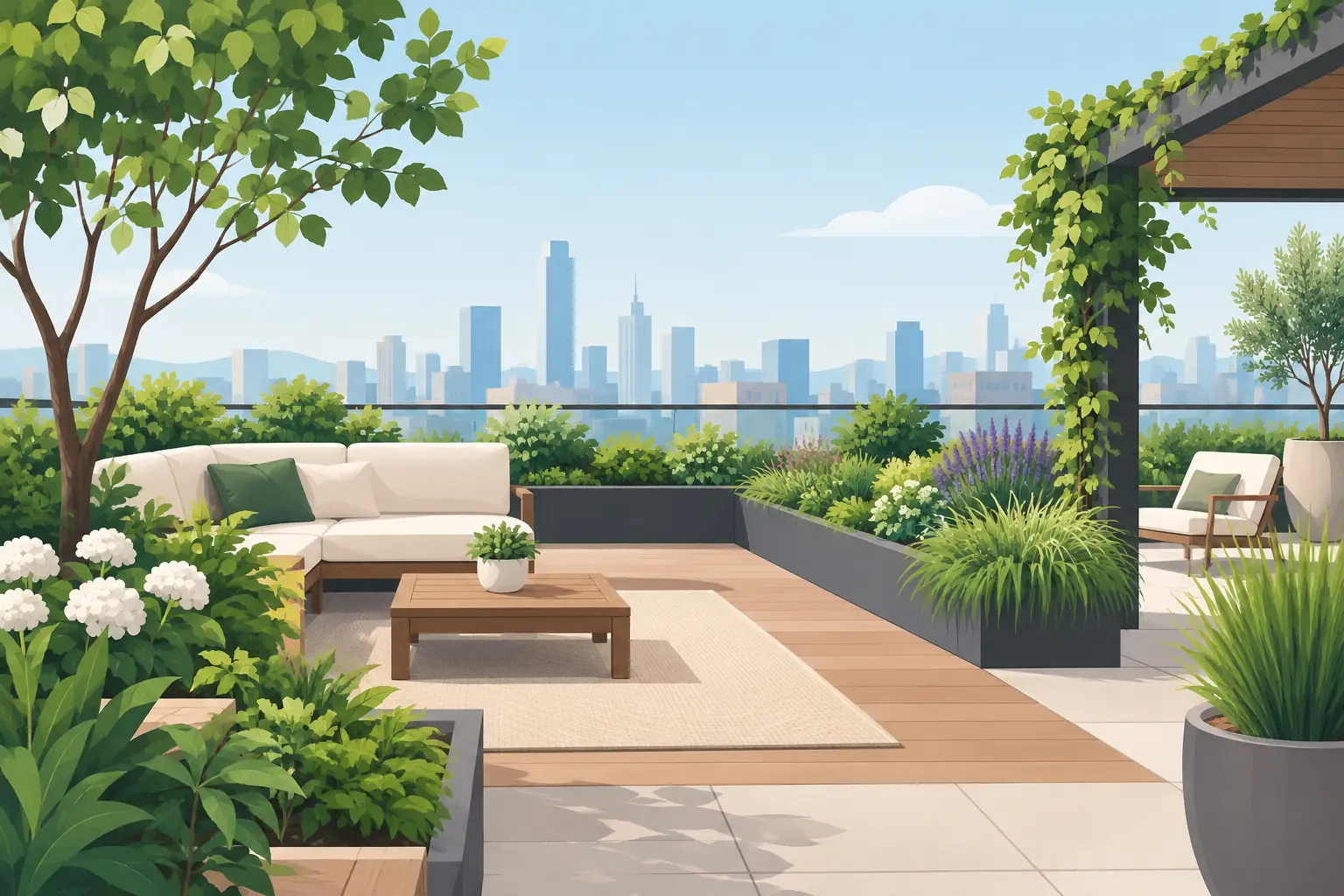
Not every seating zone needs walls, screens or a dramatic level change. Definition can be subtle. A shift from paving to gravel, a border of ornamental grasses, or a pergola overhead may be enough to tell the eye that one area ends and another begins.
Materials play a large part here. If the whole garden uses the same finish without variation, separate zones can blur together. On the other hand, using too many unrelated materials can look busy. The balance usually lies in a restrained palette with gentle contrast - perhaps porcelain paving near the house, timber detailing for a quieter retreat, and planting woven between both.
Planting helps seating areas feel settled rather than exposed. Around a lounge space, softer foliage and layered greenery can bring calm and privacy. Around a dining zone, planting should not obstruct movement or become a maintenance burden. Fragrant herbs, clipped evergreens and repeated textures often work well because they feel ordered without becoming stiff.
Height also matters. Low planting preserves openness, while taller screens can shield a zone from neighbouring views or prevailing wind. The key is knowing where enclosure is helpful and where it will block light. A sheltered area can feel restful, but if it becomes gloomy or boxed in, it may not earn its place.
Sun, shade and comfort across the day
A beautiful seating area in the wrong microclimate will disappoint. One of the most important parts of how to create outdoor seating zones is deciding when each area will be used.
If you enjoy breakfast outside, an east-facing spot may be ideal. If you entertain in the evening, late sun becomes more valuable. Families often benefit from one sunny area and one shaded option, especially during warmer months. Shade can come from a tree, pergola, sail, parasol or garden structure, depending on the look you want and the level of permanence required.
Wind is equally important, particularly in more open sites across Suffolk and Cambridgeshire. A seating area that catches every gust will never feel restful, however attractive it appears in plan. Fencing, trellis, hedging and thoughtful positioning can all improve comfort without making the space feel closed off.
Choosing furniture that suits the space
Furniture should support the garden, not overwhelm it. This sounds obvious, yet many seating zones are compromised by pieces that are too large, too deep or too visually heavy for the area available.
Scale first, style second, is usually the right approach. Measure carefully and allow proper circulation around every seat. In smaller gardens, built-in seating can be particularly effective because it uses space efficiently and feels integrated into the design. It can also reduce clutter and maintenance compared with multiple freestanding pieces.
Material choice affects both appearance and upkeep. Timber feels warm and natural but needs care over time. Powder-coated aluminium is cleaner lined and lower maintenance. Rattan-style furniture can work in the right setting, but quality varies and not every scheme benefits from it. Cushions add comfort, though they also introduce storage needs and weather considerations. It depends on how effortless you want the garden to be day to day.
Making seating zones feel calm, not cluttered
The most successful gardens are rarely the ones with the most features. They are the ones where every element has a reason to be there. Seating zones should support that sense of ease.
Avoid filling every corner with furniture. Leave breathing room. Let planting, lawn or open paving create pauses between destinations. This negative space is what helps a garden feel composed.
Lighting can strengthen the effect. Soft, warm illumination along a path, beneath a pergola or within nearby planting extends the usefulness of seating zones and makes the garden feel inviting after dark. The aim is not brightness for its own sake, but atmosphere and safe movement.
Storage should also be considered early. If furniture covers, children's toys, outdoor cushions or dining accessories have nowhere to go, even a well-designed seating area can begin to look untidy. Hidden storage in benches or nearby garden buildings often solves this neatly.
When professional design makes the difference
Some seating layouts are straightforward. Others involve awkward levels, drainage concerns, privacy issues or a need to combine several uses without creating visual noise. That is often where thoughtful garden design and build experience become valuable.
A professionally planned garden considers proportion, surface finishes, construction quality and long-term ease of maintenance together, rather than as separate decisions. For homeowners investing in a full transformation, this joined-up approach often leads to a result that feels more natural and works harder over time. At Spiritual Gardens, that usually means shaping outdoor spaces around calm, usability and the way clients genuinely want to live.
A well-placed chair can be pleasant. A well-designed seating zone can change how often you step outside, how long you stay there, and how your garden supports everyday life. Start with purpose, let the layout follow, and the space will begin to feel like somewhere you truly want to be.


Comments